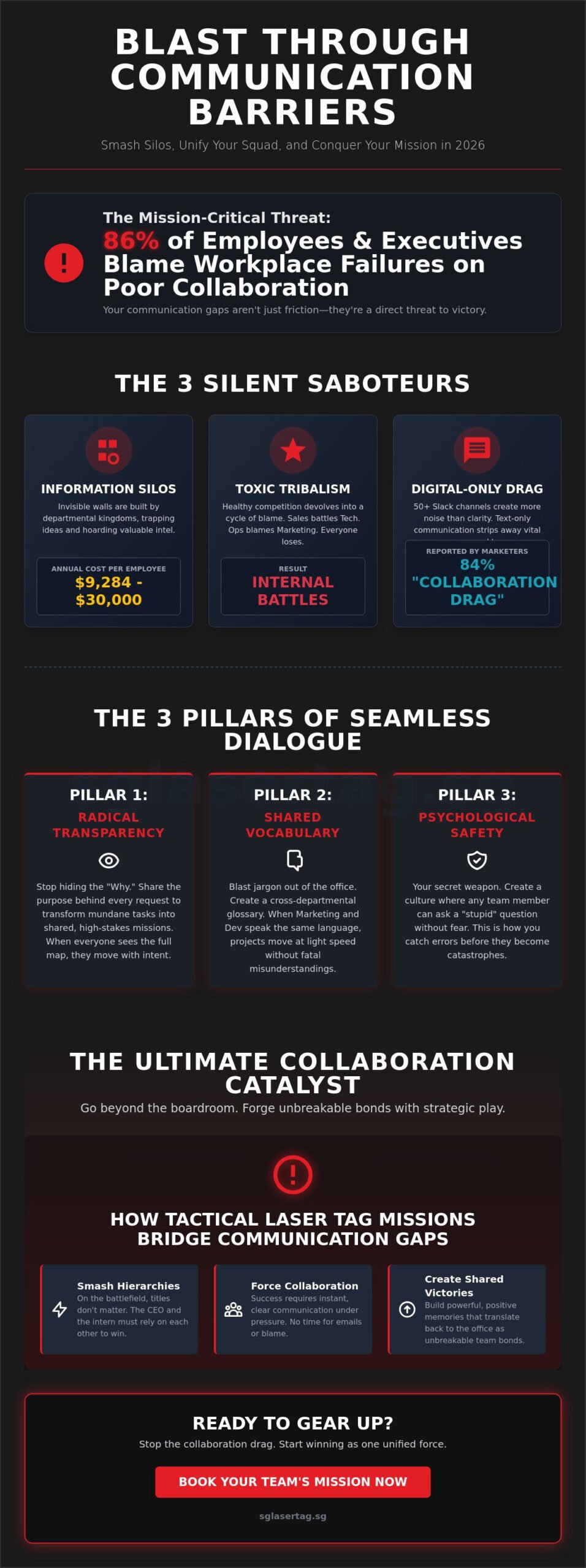
Did you know that 86% of employees and executives blame a lack of effective collaboration for their biggest workplace failures? It’s a staggering number that proves your communication gaps aren’t just annoying; they’re mission-critical threats to your victory. You’ve likely felt the friction yourself. Projects stall while Sales and Tech play a game of endless email tag that leads nowhere. Information silos trap your best ideas, and that “us vs. them” mentality drains the energy out of your office. It’s time to stop the “collaboration drag” that 84% of marketers report and start winning as one team.
This guide reveals the ultimate ways to improve cross-departmental communication in 2026. Discover how to smash those silos and build a high-octane collaborative culture through strategic communication and shared experiences. We’re diving into 10 epic strategies, from AI-powered automation to high-stakes team battles, that ensure your mission stays on track and your culture stays legendary. Get ready to blast through the barriers, reduce friction, and conquer your goals together!
Key Takeaways
- Identify the invisible walls and information hoarding habits that are currently sabotaging your team’s mission and bottom line.
- Master the three pillars of seamless dialogue to ensure radical transparency and a shared vocabulary across every department.
- Discover the best ways to improve cross-departmental communication by balancing digital multipliers with high-stakes real-world interactions.
- Implement tactical shadowing programs and cross-pollination meetings to build unbreakable links between sales, tech, and operations.
- Learn how tactical laser tag missions smash hierarchies and force high-octane collaboration through immediate, shared victories!
Breaking the Silo: Why Cross-Departmental Communication Fails
Stop the chaos! In the high-speed Singapore business world, silos are the ultimate enemy. They act like invisible walls between your remote warriors and the boots-on-the-ground office crew. When your team stops talking, they start losing. These barriers don’t just appear; they’re built by lack of trust and poor planning. If your departments feel like separate kingdoms rather than one united force, your mission is already in jeopardy.
Finding effective Organizational communication strategies is the only way to win. If you’re searching for ways to improve cross-departmental communication, you must first admit that information hoarding is costing you a fortune. Poor communication isn’t just a headache; it’s estimated to cost businesses between $9,284 and $30,000 per employee every year. That’s money you’re blasting into the void. When experts keep data to themselves, they aren’t protecting their value; they’re sabotaging the entire company’s victory.
Traditional hierarchies often act as shields rather than bridges. When creative ideas have to climb five levels of management just to reach the person in the next department, the spark dies. You’ll see the symptoms of this fragmented culture everywhere. It looks like missed deadlines, confused project briefs, and a general sense of apathy. In Singapore’s competitive market, you can’t afford to let your internal structure stifle the flow of genius.
The “Us vs. Them” Mentality
It happens fast. Healthy internal competition turns into toxic tribalism. Sales blames Operations for project delays. Tech thinks Sales promises the impossible. This cycle of blame-shifting creates a “battlefield” where everyone loses. Instead of conquering the market, your departments are too busy fighting each other for resources. You need to break this cycle before it poisons your entire culture. Victory belongs to the teams that move as one.
The Failure of Over-Digitalization
You don’t need another app. You need a real connection. Having 50+ Slack channels often creates more noise than clarity. Text-only requests strip away the nuance and tone needed for complex missions. This leads to massive misunderstandings and “collaboration drag.” To win in 2026, you must implement a “Human-First” protocol. Use digital tools as a multiplier for your strategy, but never let them replace the power of real-world interaction.
The 3 Pillars of Seamless Inter-Departmental Dialogue
Lock and load! You’re building a fortress of collaboration. To win any mission, you need a foundation that never cracks. While tools are great, they’re just equipment. Real victory comes from the three pillars of dialogue that unite your forces. Mastering these is one of the most effective ways to improve cross-departmental communication in 2026. Without them, your strategy is just noise. With them, you’re unstoppable.
Pillar 1 is Radical Transparency. Stop keeping your “Why” a secret! When your tech team understands the specific pressure Sales feels to close a deal, they fight harder to deliver. Sharing the purpose behind every cross-team request eliminates resentment. It turns a “task” into a shared mission. This transparency is the core of successful strategies for improving interdepartmental communication. When everyone sees the full map, they move with purpose.
Pillar 2 is Shared Vocabulary. Blast the jargon out of your office! If Marketing is shouting about “funnel metrics” while Dev is focused on “back-end latency,” they’re speaking different languages. You need a common tongue to achieve a seamless victory. Use simple, action-oriented terms that everyone understands. This clarity is essential for high-energy corporate team building activities where quick decisions save the day.
Pillar 3 is Psychological Safety. This is your secret weapon. It must be safe for any team member to ask a “stupid” question without fear of judgment. When people feel safe to speak up, you catch errors before they explode. You want a culture where the intern can flag a risk to the CEO. That’s how you stay agile and keep your momentum. Ready to see this in action? Consider booking a mobile laser tag event to test your team’s communication under pressure.
Establishing a Unified Language
Create a cross-departmental glossary for key project terms to ensure everyone is on the same page. Train your leaders to translate technical goals into clear business value that resonates with every department. Cross-Functional Clarity is the ability for any employee to explain another department’s current priority. When you achieve this, you eliminate the friction that slows down your project turnaround.
Fostering Psychological Safety
Encourage “Vulnerability-Based Trust” among senior leadership by having them admit when they don’t have all the answers. Reward cross-team collaboration in your performance reviews instead of just focusing on individual KPIs. Implement regular “Ask Me Anything” sessions between disparate teams to humanize the people behind the emails. This builds the inclusive spirit needed for a long-term win.
Digital Tools vs. Real-World Interaction: Finding the Balance
Don’t get stuck in the digital bunker! While your project management tools are essential for tracking missions, they are multipliers, not foundations. If your team culture is fractured, adding another $10.99 per user for an Asana Starter plan won’t fix the underlying cracks. Software is just gear. It helps you execute the strategy, but it doesn’t create the trust needed for a total victory. In the age of hybrid work, we’ve seen a 21% decline in collaboration with colleagues outside core teams. This is a red alert for any leader wanting to maintain momentum.
One of the most effective ways to improve cross-departmental communication is to step away from the screen. Software often creates a “collaboration drag” that 84% of marketers now report. When you rely solely on text, you lose the nuance of human interaction. A tactical bonding event offers a much higher ROI than another SaaS subscription because it builds the oxytocin and adrenaline necessary for real trust. Integrating high-energy things to do in singapore into your quarterly strategy ensures your team stays connected, even when they’re working from different zip codes.
The “Watercooler Effect” isn’t just about small talk; it’s about the spontaneous exchange of ideas that happens when departments collide. In a hybrid world, you have to manufacture these collisions. Tactical play forces different teams to unite against a common challenge. It breaks down the “us vs. them” mentality faster than any Zoom meeting ever could. When the mission is live, hierarchies vanish, and real communication begins. You’ll see your project turnaround speed up as barriers fall.
The Limitations of Project Management Apps
Identify the moment a thread should have been a five-minute conversation. Endless comments in Trello or Asana often lead to notification fatigue, causing vital info to be ignored. Set strict boundaries for your digital channels to prevent burnout. If a request involves more than three back-and-forth messages, pick up the phone or meet in person. This “Human-First” approach keeps your communication sharp and your team focused on the win. Don’t let your tools become the bottleneck.
The Power of Low-Stakes Social Environments
People communicate better when the “Boss” hat is off. Low-stakes environments, like a laser tag battlefield, reveal hidden leadership styles and communication strengths. The science is simple: shared adrenaline and victory release chemicals that bond humans together. This creates a lasting connection that carries back into the office. You’ll find that the friction between Sales and Tech disappears once they’ve conquered a mission as a single, high-octane unit. It’s about creating memories that fuel future collaboration.
5 Practical Strategies to Strengthen Departmental Links
Ready to deploy? It’s time to take your strategy from the briefing room to the battlefield. Theory won’t win the war. You need tactical, boots-on-the-ground ways to improve cross-departmental communication that deliver immediate results. These five strategies are designed to smash barriers and unite your squads into a single, high-octane force. Stop talking about collaboration and start executing missions that matter.
- Launch Departmental Shadowing: Send your junior staff into the “trenches” of another department for a half-day.
- Host Cross-Pollination Meetings: Align your quarterly goals by bringing department heads together to map out shared victories.
- Build a Shared Win Board: Use a digital or physical space where departments celebrate the successes of their colleagues.
- Standardize Hand-offs: Create clear, mandatory checklists for every project transition to eliminate guesswork.
- Schedule a Communication Reset: Book a high-energy team battle once a year to clear the air and rebuild trust.
Execution is everything. When you standardize the “Hand-off” process, you remove the ambiguity that leads to project delays. Clear checklists ensure that when Sales passes a client to Operations, every detail is locked in. This reduces friction and keeps your momentum at an all-time high. To truly bond your team, nothing beats an annual reset. Book a Corporate Laser Tag mission to see how your team handles high-pressure communication in real-time!
Cross-Functional Shadowing Programs
Spending half a day in another department’s shoes builds instant empathy. Your team will identify friction points that are invisible from their own desks. By formalizing the feedback gathered during these sessions, you turn casual observations into actionable improvements. It’s about seeing the map from every angle to ensure a total victory. Don’t just watch from the sidelines; get in the game and understand the challenges your colleagues face daily.
Standardizing Feedback Loops
Use the “Stop, Start, Continue” framework to handle inter-departmental reviews without the drama. This keeps the focus on the mission rather than individual egos. A standardized feedback loop is a recurring, scheduled opportunity for teams to align without an active crisis. This proactive approach allows you to handle conflict before it escalates to management. It keeps your culture inclusive and your communication channels wide open for the next big blast of innovation.
Strategic Play: Using Laser Tag to Bridge Communication Gaps
Blast through the boardroom boredom! While we’ve discussed digital tools and shadowing, nothing beats the raw, heart-pounding energy of a live mission. Laser tag isn’t just a game. It’s a high-stakes communication simulator. It’s one of the most effective ways to improve cross-departmental communication because it forces teams to coordinate under pressure. You can’t conquer the field with a slow email thread. You need real-time, vocal strategy to win.
In the heat of a battle, corporate titles disappear. You’ll see an intern leading the CEO through a tactical retreat or a junior developer calling the shots for the marketing director. This breaks down the hierarchies that usually stifle creativity. When you’ve fought side-by-side to achieve a shared victory, those old departmental silos crumble. You’re no longer just colleagues; you’re a united force. This is how you build a culture that’s both thrilling and reliable.
We specialize in mobile laser tag, bringing the entire battlefield to your doorstep. Whether it’s your office car park or a vacant floor, we transform your space into an epic arena. It’s a zero-friction solution for busy planners. Our professional team handles the setup and facilitation, ensuring a seamless experience for every player. Experience why laser tag singapore creates the kind of lasting memories that fuel office collaboration for months.
Tactical Missions as Team Simulators
Using “Capture the Flag” modes teaches your squad about resource allocation. You have to decide who defends the base and who leads the charge. “VIP Escort” missions are even more intense. They highlight the importance of protecting key assets, mirroring the high-stakes nature of a major project launch. The feedback loop is instant. If your communication fails, you get tagged. It teaches teamwork faster than any corporate seminar ever could.
Mobile Battles: Zero-Friction Team Building
Imagine the morale boost when your team discovers their office has become a tactical zone. The surprise factor alone spikes engagement and excitement. We provide mobile setups that turn any space into a professional arena. Our inclusive game modes ensure everyone can participate, from the most athletic to the most strategic. We bring the ultimate laser tag experience to you, making it the easiest and most epic team building event you’ll ever book.
Conquer the Communication Battlefield
Victory is within your reach! You’ve learned how to smash silos, build psychological safety, and balance your digital tools with real-world energy. Mastering these ways to improve cross-departmental communication is the secret to a high-octane culture where every mission succeeds. Don’t let your team get bogged down in “collaboration drag.” It’s time to lead your squad toward a more cohesive and energetic future where everyone moves as one united force.
We’ve spent over 10 years mastering corporate facilitation to help teams like yours win. Our mobile setup brings the ultimate laser tag experience directly to your doorstep. We use advanced infrared gear for a seamless, pain-free battle that focuses on strategy and teamwork. Whether you’re in an office car park or a vacant floor, we transform your space into a tactical zone where communication barriers vanish and leaders are born.
Ready to blast through your communication silos? Book your DUX Laser Tag Singapore mission today!
Get ready to see your project turnaround times fly and your team spirit soar. Let’s make 2026 your most collaborative and successful year yet. Lock and load!
Frequently Asked Questions
What are the most common barriers to cross-departmental communication?
Information silos and “us vs. them” mentalities are the biggest threats to your mission. 86% of employees cite a lack of effective collaboration as the primary cause of workplace failures. These barriers often grow from departmental tribalism where teams like Sales and Tech stop sharing data. This hoarding leads to massive project delays and expensive misunderstandings that drain your energy.
How can small businesses improve communication between teams without a big budget?
Focus on low-cost, high-impact ways to improve cross-departmental communication like departmental shadowing. Let your junior staff spend half a day in another department to build empathy and see the “map” from a new angle. You can also implement a shared “Win” board or host “Cross-Pollination” meetings in your existing office space to align on quarterly goals without spending a cent.
Can team building activities like laser tag really improve workplace productivity?
Absolutely! Tactical play acts as a high-speed simulator for real-world collaboration. Companies with high team engagement see 23% higher profitability because their squads move faster and with more clarity. Laser tag missions force different departments to communicate under pressure to achieve a shared victory. This reduces “collaboration drag” and builds the trust needed for a seamless office environment.
How do we encourage quiet or introverted employees to communicate across departments?
Use structured, low-pressure environments that allow strategy to shine over small talk. 97% of Gen Z workers want to show their personality in professional communication, often preferring instant messaging platforms. Play-based activities like laser tag are great because they allow introverts to lead through tactical genius. This builds confidence and creates a safe space for them to contribute their best ideas to the mission.
What role does leadership play in fostering inter-departmental collaboration?
Leaders are the ultimate commanders who set the tone for radical transparency. 79% of employees state that the quality of communication from leadership directly affects their productivity and motivation. You must model “Vulnerability-Based Trust” and reward cross-team wins rather than just individual KPIs. When leaders prioritize the whole team’s victory over departmental glory, silos vanish and the entire company wins.
How often should we organize cross-departmental bonding events?
Aim for a major cross-departmental mission at least once a quarter to keep the momentum high. This frequency prevents silos from reforming and ensures new hires are integrated into the culture quickly. Schedule a high-energy “Communication Reset” once a year to clear the air and rebuild trust. Regular tactical play keeps your communication channels wide open and your team ready for any challenge.
What are the best digital tools to support cross-departmental communication?
Use multipliers like Asana or Trello to track your project missions. As of 2026, the Asana Starter plan is $10.99 per user and offers great automation features. Pair these with instant messaging platforms for quick bursts of info. Just remember that tools are gear, not the strategy. Don’t let 50+ Slack channels create notification fatigue; keep the human connection at the center of your plan.
How do we measure the success of our communication improvement strategies?
Track your project turnaround times and employee retention rates to see the real impact. 63% of people looking to quit their jobs claim poor internal communication influenced their decision. If your turnover drops and your “collaboration drag” decreases, you’re winning. Monitor how often different departments hit shared goals to ensure your new ways to improve cross-departmental communication are delivering a total victory.